Split 3: a landmark of Yugoslav architecture and urban planning
Most visitors know Split for Diocletian's Palace, Roman heritage, and the historic stone streets of the city centre. However, the architectural story of Split extends far beyond antiquity. On the eastern side of the city lies Split 3, one of the most significant urban planning and architectural projects developed in former Yugoslavia.
Built from the late 1960s through the 1970s, Split 3 represents an important chapter in the development of modern Split. It was created during a period when the city was expanding rapidly and needed new residential areas that could respond to population growth while maintaining a high standard of urban life.
How Split 3 was created
In the second half of the twentieth century, Split experienced major demographic and economic changes. The expansion of industry, especially the shipbuilding sector, attracted new residents and created a need for additional housing.
In 1968, an international urban planning competition was organised for the development of a new part of Split. The winning proposal was created by Slovenian architects Vladimir Mušič, Marjan Bežan, and Nives Starc. Their plan was not conceived as a simple housing estate, but as a complete urban district with residential buildings, schools, shops, public services, sports facilities, and shared spaces.
The project introduced a new approach to urban development in Split, combining modern architectural ideas with the specific conditions of a Mediterranean city. Construction continued throughout the 1970s, gradually transforming the eastern part of Split.
The urban concept of Split 3
The main idea behind Split 3 was to create a neighbourhood where different functions of daily life were connected within walking distance. Residential buildings were planned together with pedestrian routes, public squares, schools, and local services.
A distinctive feature of the project was the relationship between modern urban planning and Split's historical landscape. The organisation of streets and open spaces was influenced by the ancient Roman division of the land around Diocletian's Palace, creating a connection between the city's Roman past and its twentieth-century development.
The architects paid particular attention to the orientation of buildings, sunlight, ventilation, and the relationship between residential areas and public spaces. This approach became one of the important characteristics of Yugoslav modernist architecture.
Award-winning architecture
While the overall urban plan of Split 3 was developed by Mušič, Bežan, and Starc, many individual buildings within the neighbourhood were designed by Croatian architects, including Dinko Kovačić and Mihajlo Zorić.
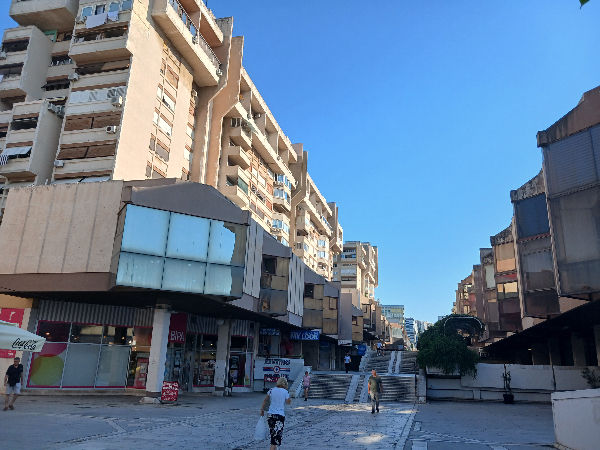
One of the most recognised examples is the residential complex along Šime Ljubića Street, designed by Kovačić and Zorić. The project received several important architectural awards, including the award of the 8th Zagreb Salon in 1973, the Borba Award, and the Vladimir Nazor Award in 1974.
These projects became significant examples of residential architecture in Yugoslavia because they demonstrated how apartment buildings could be combined with carefully designed public spaces and a strong connection between architecture and everyday life.
Exploring Split 3 today
Today, Split 3 offers visitors a different perspective on the city beyond the historic centre. Instead of Roman monuments and medieval streets, the neighbourhood reveals the architectural ideas of the second half of the twentieth century through its residential buildings, pedestrian areas, public squares, and urban structure.
Places worth exploring include Šime Ljubića Street, Ruđera Boškovića Street, and the wider residential areas developed as part of the Split 3 project. Walking through the neighbourhood provides insight into how architects and planners imagined modern urban living during the period of socialist Yugoslavia.
For those interested in modern architecture in Split, Yugoslav architecture, or lesser-known places beyond the usual tourist routes, Split 3 offers an opportunity to understand a different stage of the city's development.
Split's identity has been shaped by many historical periods, from the Roman Empire and Venetian influence to twentieth-century modernism. Split 3 remains one of the most important examples of how the city continued to grow and transform in the modern era.
Sanja - Tour Guide in Split